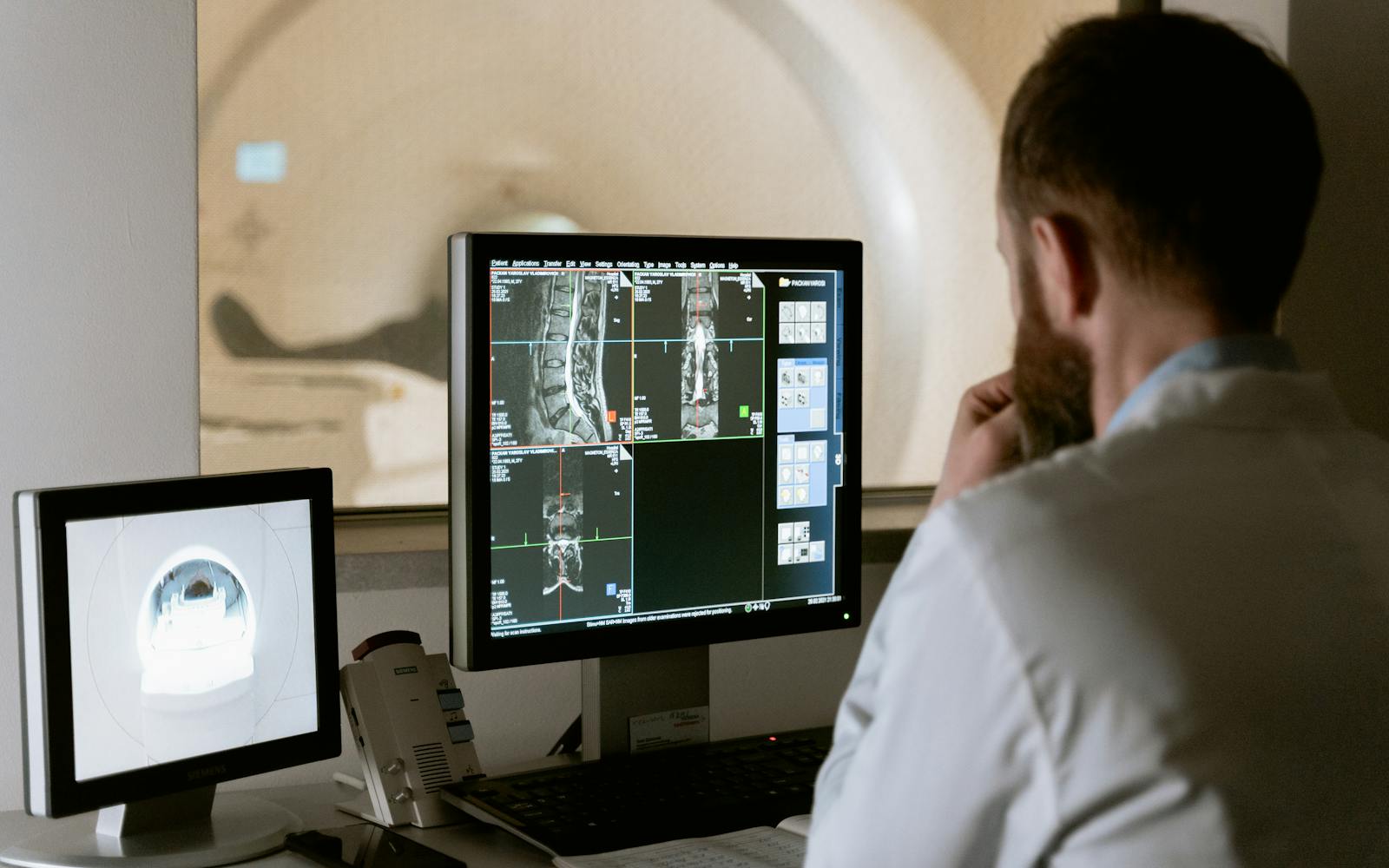
Back and spinal injury claims cover a wider clinical range than any other personal injury category - from a soft-tissue lumbar strain that settles in three months to tetraplegia requiring 24/7 care for life. The Judicial College Guidelines 17th edition (April 2024) split the field into two very different categories: back injuries (the traditional muscle / disc / fracture spectrum) and paralysis (paraplegia and tetraplegia following spinal cord injury). Getting the categorisation right is the first thing that happens in any evaluation.
Casibus works with SRA-regulated personal injury specialists on a no win, no fee basis. Every case depends on its evidence.
How back and spinal injuries are categorised
Back injury - severe
JCG 17th edition valuation: the most severe back injuries (not amounting to spinal cord injury) are valued at around £111,150-£196,450 for cases involving severe damage to the spinal cord, associated with severe pain, impaired bladder / bowel function and sexual difficulty. Less catastrophic severe back injuries - disc lesions, vertebral fractures, chronic conditions with permanent disability - sit in lower severe brackets.
Back injury - moderate
Cases of residual disability - compression / crush fractures with substantial risk of osteoarthritis, disturbance of ligaments and muscles giving pain and stiffness, prolapsed discs requiring surgery. Expect moderate brackets in the tens of thousands of pounds range.
Back injury - minor
Soft-tissue injury recovering in less than 5 years. Full recovery within months falls at the bottom of the bracket. The minor-back range runs from around the high hundreds up to mid-five-figure amounts for longer-duration minor injuries.
Paraplegia
Paralysis of the lower half of the body following injury at or below the thoracic vertebrae. A discrete JCG category - the range is substantially higher than non-SCI severe back injury and accounts for life-long care, aids, accommodation and employment loss. JCG general-damages figures for paraplegia are well into six figures; the total claim including special damages typically reaches seven or eight figures.
Tetraplegia (quadriplegia)
Paralysis affecting all four limbs, following cervical spinal cord injury. The highest-value single personal injury category in the JCG. General damages alone are in the region of around £396,140-£493,000 for the most severe tetraplegia; whole-case settlements routinely reach eight figures once lifetime care, accommodation, equipment, therapy and earnings loss are valued.
What counts as a 'spinal cord injury' in law?
Clinically, 'spinal cord injury' (SCI) is distinct from 'back injury'. The back (vertebrae, discs, paravertebral muscles, ligaments) is mechanical support and soft tissue. The spinal cord runs inside the vertebral canal and carries motor and sensory signals. Damage to the cord produces paralysis, altered sensation, bladder / bowel / sexual dysfunction, and autonomic dysreflexia (at higher levels). It is the cord damage - not the bone damage - that drives the highest brackets.
Common causes in our caseload: RTAs (particularly motorcycle and cyclist-v-HGV), falls from height (ladders, scaffolding, roofs), diving / water incidents, sports injuries, medical misdiagnosis of cauda equina, and violence. The Spinal Injuries Association and Back Up Trust are the two leading UK SCI charities and an important part of the post-discharge picture.
Cauda equina syndrome - the red-flag medical negligence crossover
Cauda equina syndrome (CES) is compression of the nerve roots at the base of the spinal cord, typically by a prolapsed disc. It is a surgical emergency - missed or delayed diagnosis produces permanent bladder / bowel / sexual dysfunction and leg weakness. CES is the most common single high-value medical-negligence claim against primary care and emergency departments. Bolam / Bolitho / Montgomery principles apply, alongside the narrower 'red flag' clinical standard. If you attended a GP or ED with saddle anaesthesia, urinary retention, bilateral leg pain or new bowel disturbance and were not urgently referred for an MRI, you may have a claim - see medical negligence.
Special damages - where the real money is in SCI cases
- Care and assistance (24-hour care in high-level SCI; professional rates apply).
Typical routes to a back or spinal injury claim
- RTA - front / rear impact, side impact, cyclist / motorcyclist vs car or HGV, pedestrian knockdown. See road traffic accidents.
Interim payments
In a serious SCI claim, you do not wait until trial or final settlement to receive funds. Under CPR Part 25.6, once liability is admitted or found on an early application, the court can order interim payments to cover care, accommodation, adaptations and immediate rehabilitation needs. Interim payments are standard practice in any SCI or CES claim - see interim payments.